Recycling and Sustainability at Mitcham Skip Hire
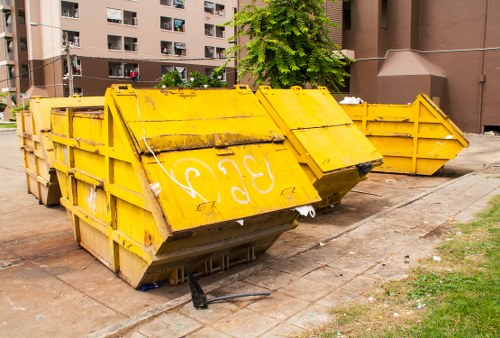
At Mitcham Skip Hire we take a practical, neighbourhood-focused approach to creating an eco-friendly waste disposal area that supports local borough priorities. Our service model is built around maximising diversion from landfill, supporting reuse and refurbishment, and providing clear options for residents and businesses to deposit segregated loads. We operate with an eye towards long-term resource management and reduced environmental impact.We work closely with the boroughs' approach to waste separation, encouraging customers to sort materials into common local streams — dry mixed recycling, glass, metals, soil and hardcore, plus separate food and garden waste where applicable. Our operational teams audit skips and advise on best-practice separation, helping to increase the capture of high-value recyclables and organics. This helps the whole area become a more sustainable rubbish area and supports municipal recycling schemes.
 Our community-facing policies include clear information at point of hire, on-skip signage, and guidance for mixed demolition and household clearances. We maintain a transparent system of tracking waste types collected from each job so we can report the tonnage sent to transfer facilities, materials recovery facilities (MRFs) and specialist processors. Transparency and tracking are essential to meet our targets and to demonstrate the real benefits of an eco-conscious waste disposal strategy.
To drive measurable progress we have set a formal recycling percentage target: a core objective of 75% recycling and recovery of materials from our skips by 2028, rising to 80% for selected non-hazardous streams by 2030. This target covers diversion to recycling, reuse and energy recovery where appropriate, and excludes regulated hazardous fractions that require specialist treatment. The target aligns with local ambitions for reduced landfill and higher resource circularity across south London.
Key to meeting these goals are the local transfer stations and processing centres we use. We route loads to authorised local transfer stations and MRFs across the borough and south London rather than long-distance disposal. Our preferred partners include civic transfer stations and reuse centres that handle segregated loads, bulky waste processing hubs for furniture and white goods, and soil and hardcore recycling yards for construction material recovery.
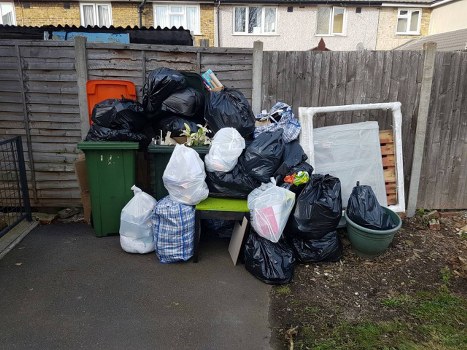 Partnerships with charities are central to our reuse strategy. We work with local community charities and furniture reuse organisations to salvage reusable household items, working clothes and small furniture from clearances. By collaborating with these groups we ensure items in good condition get a second life, reducing the need for raw material extraction and benefiting local families and projects. Charity partnerships are a core element of our sustainable rubbish area model.
Our fleet is another pillar of lessening environmental impact. We have progressively upgraded to low-carbon vans and service vehicles: Euro VI engines where diesel is required, hybrid service vans, and an expanding number of fully electric vehicles for local collections and drop-offs. These low-emission vehicles reduce tailpipe pollutants in densely populated neighbourhoods and lower the carbon footprint of transport within the eco-friendly waste disposal area.
Operational policies also prioritise route optimisation, load consolidation and scheduled collections to minimise mileage. Drivers are trained in eco-driving techniques and we monitor idling and fuel efficiency. Together with our low-carbon vans, these practices reduce emissions while maintaining responsive service levels — a balance that supports both customers and environmental goals.
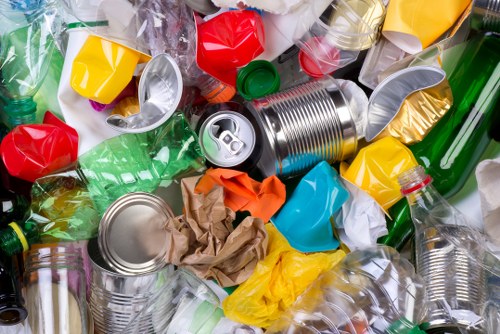
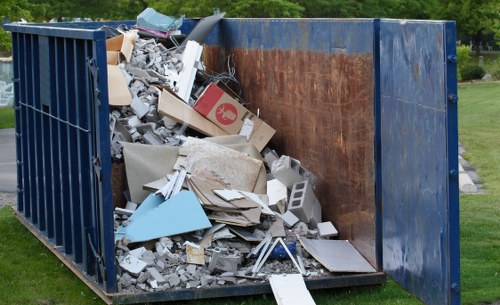
We deploy a range of recycling activity tailored to borough needs: separate collections for glass and cans, targeted timber and plasterboard recycling from construction and refurbishment projects, and dedicated soil and hardcore recovery for landscaping and building sites. The boroughs' guidance on waste separation influences our segregation matrices and the signage we supply when hiring skips for local projects.
We report progress through periodic sustainability statements and material-specific summaries, showing how much material is recovered, reused or sent for energy recovery. Our internal audits check contamination levels, MRF rejection rates and charity referral numbers to help refine practices. Continuous improvement is embedded in every job we undertake to ensure the eco-friendly waste disposal area keeps evolving.
 Alongside recycling and reuse, we support circular procurement by advising clients on material choices that make future recycling easier — for example, specifying recyclable packaging, avoiding composite materials where possible, and separating metals and timber on-site. These small decisions help maintain the integrity of collected streams and improve recovery rates at transfer stations.
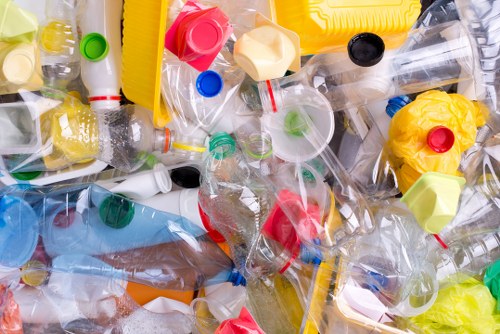
Summary of our sustainable commitments
- Recycling percentage target: 75% by 2028, moving toward 80% for selected streams by 2030.
- Local transfer stations: prioritised routing to borough and south London processing hubs to reduce travel and improve recovery.
- Charity partnerships: active reuse networks for furniture, textiles and small domestic goods.
- Low-carbon vans: a growing electric and hybrid fleet plus Euro VI vehicles for heavier work.
- Local recycling activities: tailored streams for glass, metals, timber, plasterboard, soil and garden waste.
Our commitment
We are committed to being a practical partner for households, builders and businesses seeking a genuinely sustainable rubbish area and eco-friendly waste disposal area. By combining targets, local partnerships, low-carbon logistics and community reuse schemes, Mitcham Skip Hire seeks to lead by example and help the boroughs meet their waste reduction ambitions.