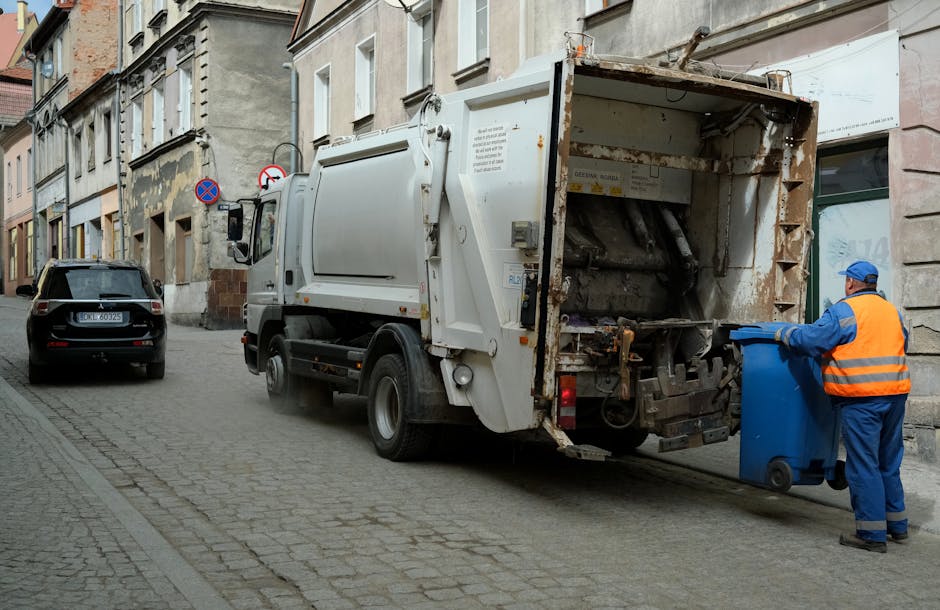
Mitcham High Street rubbish removal guide for tight access jobs

If you have ever tried to clear rubbish from a property off Mitcham High Street, you will know the issue is rarely the waste itself. It is the access. Narrow frontages, busy pavement space, awkward shared entrances, parked cars, low branches, and stairwells that seem to get smaller the more you carry through them. That is exactly why this Mitcham High Street rubbish removal guide for tight access jobs matters: it helps you choose the right method, avoid wasted time, and get the job done without turning a simple clearance into a very messy day.
In practice, tight access jobs call for a more thoughtful approach than standard kerbside collections. The wrong vehicle, the wrong loading method, or a poor plan for where waste will be stacked can slow everything down. The good news? With the right preparation, even tricky sites can be cleared efficiently. This guide walks through the options, the common obstacles, and the best way to handle rubbish removal on a busy local street without drama. Let's make it easier.
Why Mitcham High Street rubbish removal guide for tight access jobs Matters
Tight access changes everything. On a normal driveway, a team can often park close, load quickly, and move on. On Mitcham High Street, the situation may be more constrained. You might be dealing with a shopfront, a flat above a parade of businesses, a rear alley, a basement room, or a property with no sensible space for a skip. That changes the whole removal plan.
The biggest reason this matters is simple: access affects cost, timing, safety, and what waste removal method is actually suitable. If you try to force a standard skip into a place that cannot take it, you may end up paying for permits, delays, or an extra collection. If you pick a service that relies on wheelbarrows and long carry distances without preparing the route, you will feel the slowdown straight away. And yes, everyone notices when a clearance takes twice as long as expected.
Tight access jobs also tend to involve more moving parts. Someone may need to manage traffic or pedestrians. Someone else may need to keep a communal entrance clear. If the waste includes bulky furniture, broken fittings, or mixed builder's debris, the loading plan needs to be neat and organised. It is not glamorous, but it is what makes the job work.
For local households and businesses alike, a sensible approach can be the difference between a painless collection and a half-finished day with rubbish still sitting there in black bags. That is why the right method matters more here than in an open, suburban setting.
How Mitcham High Street rubbish removal guide for tight access jobs Works
The process usually starts with a quick access check. Not a huge survey, just a proper look at how waste will actually leave the site. Can a vehicle stop nearby? Is there a rear lane? Are there steps, a narrow hallway, or a doorway that turns sharply? These small details decide whether a skip, a wait-and-load service, a grab lorry, or a man and van collection makes the most sense.
For many tight access jobs, a wait and load skip hire arrangement can be especially useful because the vehicle stays on site only long enough to load. That can be ideal where parking is limited or a long stationary skip would cause issues. In other situations, grab hire services are better when waste is already piled in an accessible spot and the machine can reach over or alongside the material. If you are clearing mixed household items, a man and van style collection can also be a practical fit.
Once the method is chosen, the team usually confirms what type of waste is being removed. Builders' rubble, garden waste, furniture, plasterboard, metal, and appliances are all handled differently. Some items are restricted or need specialist treatment, so it helps to sort as much as possible before collection. If the load is a mix of ordinary bulky waste and a few problematic items, it is better to flag that early rather than discover it halfway through loading. That bit alone saves a lot of awkwardness.
Then comes the on-site part. Good operators will protect walkways where needed, think about lifting routes, and load in a way that keeps the access path clear. In a tight street environment, that means being tidy, quick, and respectful of neighbours. Truth be told, those little details matter just as much as the lorry itself.
Key Benefits and Practical Advantages
When rubbish removal is planned properly for tight access, the benefits are immediate. The most obvious one is speed. A well-matched service spends less time manoeuvring and more time clearing. That can matter if you are trying to keep a refurbishment moving, reopen a shop, or simply get a home back to normal.
Another major advantage is flexibility. Not every job needs a big skip. Sometimes a smaller vehicle, a short loading window, or a collection carried out in stages is the smarter choice. Tight access often rewards flexibility more than brute force. A service that understands this will usually give you a more realistic plan from the outset.
There is also less disruption. On a busy local road, disruption is a real concern. The right method can reduce the time a vehicle spends parked, minimise obstruction, and make life easier for neighbours and passers-by. That can be a relief when the street is already busy and everyone is trying to get somewhere.
Finally, the right approach can reduce waste handling errors. If the collection method encourages sorting, safe loading, and good segregation, recyclable material is more likely to stay clean and useful. If you want a clearer idea of how waste is handled after collection, it is worth looking at recycling and sustainability practices and at the company's waste recycling services.
Expert summary: For tight-access rubbish removal, the best method is usually the one that reduces handling distance, avoids unnecessary parking issues, and matches the waste type to the site layout. Simple, but easy to get wrong.
Who This Is For and When It Makes Sense
This guide is useful for homeowners, landlords, letting agents, shop managers, builders, tradespeople, and office managers dealing with a clearance near Mitcham High Street. If you have ever looked at a pile of rubbish and thought, "Right, but how is that actually getting out?", this is for you.
It makes particular sense if your property has one or more of these features:
- a narrow side passage or back alley
- no space for a traditional skip
- limited or controlled parking
- shared access with neighbours or tenants
- stairs, basements, or awkward internal corners
- bulky items that need careful lifting
- a deadline, such as a move-out, handover, or renovation milestone
It is also relevant if you are handling a one-off clearout rather than ongoing waste production. A full kitchen rip-out, a loft clear-out, a shop refit, or after-the-builders debris all create different access challenges. On the other hand, if you are already using a regular site waste system, you may be better served by a more scheduled arrangement such as builders waste removal or construction waste disposal.
A small but important point: tight access does not always mean small volume. You can have a lot of waste in a tiny footprint. That is where local experience really counts.
Step-by-Step Guidance
Here is a practical way to handle a tight access clearance without overcomplicating it.
- Measure the access route. Check doorway widths, passage turns, steps, surface condition, and any low obstacles. A tape measure is boring, but it is your best friend here.
- List the waste types. Separate household items, green waste, rubble, timber, metals, white goods, and anything that may need special handling.
- Decide what method suits the site. If parking is the main issue, a short loading window may work best. If the waste can be reached from the roadside or over a boundary, grab hire may be ideal. If the waste is mainly bulky but movable by hand, man and van can be a neat solution.
- Clear the loading path. Move planters, bins, bikes, and loose clutter out of the route. It sounds obvious, but you would be amazed how often a perfect plan is derailed by a sofa wedged in the hallway.
- Check restricted items. Appliances, fridges, mattresses, confidential paperwork, and certain materials may need specific arrangements. If in doubt, ask before collection day.
- Confirm parking and timing. On a high street, timing is half the battle. Off-peak slots can reduce stress and make loading safer.
- Load efficiently. Heavier items should go in first, with smaller waste used to fill gaps where appropriate. This keeps the load stable and can reduce wasted space.
- Finish with a sweep-up. A final tidy matters. It is the difference between "cleared" and "properly cleared".
If the job is urgent, the same framework still applies, just faster. In some cases, same day skip hire or a same-day collection style approach may be worth considering, provided the access and timing work for the site.
Expert Tips for Better Results
First, be honest about access. People often underestimate how narrow a passage feels once a mattress, a washing machine, or a load of loose timber is being carried through it. A route that looks "fine" at a glance can become awkward very quickly.
Second, think in terms of loading time, not just waste volume. Two cubic yards of mixed rubbish with awkward stairs can take longer than a larger, easier load in open access. That is why a slightly more expensive but better-matched service may actually save money overall. Frustrating, but true.
Third, group items before the team arrives. If possible, place similar items together so the load can be built in a sensible sequence. For example, keep rubble separate from furniture, and keep garden waste away from household soft furnishings. It cuts down on handling and speeds up the job.
Fourth, if you are in a shared property or business premises, tell people what is happening. A simple note to neighbours or staff can prevent surprise, blocked access, or someone stepping around the wrong side of a moving load. Little bit of communication, big improvement.
Fifth, for very tight or sensitive sites, ask about enclosed or lockable options. Enclosed and lockable skip hire can be useful where security, tidiness, or weather protection matters. Not every job needs it, but some do.
And one more thing: do not leave every decision to the last ten minutes. The smoothest jobs are usually the ones where the access plan was done before the waste pile looked like a small mountain.
Common Mistakes to Avoid
The first mistake is ordering the wrong type of service. A standard skip might seem like the obvious answer, but if there is nowhere suitable to place it, or you need loading to happen fast, it can create more problems than it solves.
The second is failing to check whether a permit or parking arrangement is needed. If a skip or vehicle will be on the public highway, it may involve extra rules. For that reason, it is wise to look into skip hire permits and skip permits before you commit. The exact requirement depends on location and setup, so it is better to verify than to guess.
The third mistake is mixing too many waste types without warning the provider. A load full of mixed rubbish is normal in many cases, but hazardous or restricted items are different. If you have anything that may need specialist treatment, bring that up early. That includes items best handled through hazardous waste disposal.
The fourth is forgetting the final exit route. People think about how waste will be loaded, but not how it will come back out of the building. A sofa may fit through the front room after ten minutes of turning, tilting, and, let's face it, some mild swearing. Better to check first.
The fifth is choosing a method based only on price. On a tight-access street, the cheapest quote is not always the most practical one. The right fit is usually the one that reduces re-handling, delays, and parking friction.
Tools, Resources and Recommendations
You do not need complicated equipment to prepare well, but a few basics help a lot. A measuring tape, marker labels, gloves, sacks, a torch for dark corners, and a phone camera for access photos can all make quoting and planning easier. If the route is especially awkward, take a few clear pictures from the street to the load point and from the load point back to the exit.
It also helps to know what the provider can actually take. Before arranging removal, review what can go in a skip so you are not left sorting out an item that should have been separated earlier. For bulky household items, pages such as mattress and sofa disposal and fridge and appliance removal are also useful reference points.
If you are clearing a loft, a garage, or a whole house on a tight street, it may be worth comparing a few services. A domestic skip hire setup may suit some homes, while a house clearance or garage and loft clearance service may fit better if the main problem is the labour involved.
For businesses, a more discreet or time-sensitive approach may be needed. In that case, options like office clearance or commercial skip hire can be more suitable depending on the amount and type of waste.
Law, Compliance, Standards, or Best Practice
For rubbish removal in the UK, the main point is straightforward: waste must be handled responsibly, safely, and by an operator that can manage it properly. You do not need to become a legal expert to organise a removal, but you should be aware of a few basics.
First, hazardous items need special care. That includes materials that may pose risk to people or the environment. Do not leave these mixed in with ordinary rubbish unless the provider has clearly said they can handle them in that way. Better to ask early than improvise on the day.
Second, access on public land can involve parking or permit considerations. If a vehicle or container will sit on the highway, additional permissions may be relevant. The practical answer is to confirm the arrangement before the job is booked. In a tight street, assumptions can be expensive.
Third, waste should be transported and processed in line with accepted environmental best practice. A reputable provider should be clear about responsible disposal and recycling. If you are weighing up your options, it is sensible to review pages about payment and security, insurance and safety, and health and safety policy. Those pages help show how seriously the business treats the practical side of the work.
One final best-practice point: keep paperwork, invoices, and job notes together if the clearance is part of a move, tenancy change, or refurbishment project. It sounds dull. It is dull. But it can save a lot of hassle later.
Options, Methods, or Comparison Table
There is no single best method for every tight access job. The best choice depends on space, waste type, urgency, and how much manual handling you want to avoid.
| Method | Best for | Strengths | Watch out for |
|---|---|---|---|
| Wait and load | Short, controlled clearances with limited parking | Fast, flexible, avoids leaving a container in place | Needs good timing and the load must be ready |
| Grab hire | Accessible waste piles, heavier mixed material, roadside loading | Good reach, efficient for bulky loads, less manual carrying | Needs suitable clearance space and reach |
| Man and van | Bulky household items, mixed junk, smaller clearances | Flexible, convenient, good for awkward internal access | May take longer on large jobs |
| Skip hire | Projects with space for a container and repeat loading | Simple for ongoing work, useful on longer jobs | May need permits or more space than a tight site allows |
In a place like Mitcham High Street, the best method is often decided by the street itself. If the waste can be loaded quickly from the front, wait and load or grab hire may feel much smoother. If the job is mostly inside a property, man and van can be less disruptive. If you have an ongoing project with reasonable space, a skip can still be the right answer. It is all about fit, not fashion.
Case Study or Real-World Example
Picture a small flat above a shopfront near Mitcham High Street. The tenant has moved out, leaving a broken wardrobe, a mattress, assorted bags, and a few boxes of mixed household waste. There is no driveway, the pavement is narrow, and the stairwell bends sharply halfway up. A standard skip would be awkward, possibly impossible, and probably overkill.
In that situation, the best plan is usually to photograph the access route, separate any restricted items, and book a collection method that suits short loading windows. The waste is carried down in stages, grouped at the ground-floor exit, then loaded efficiently into the vehicle. The team keeps the pavement clear as much as possible, works methodically, and finishes with a quick tidy-up. Nothing flashy. Just a clean, sensible job.
Now imagine the same building during a refurb, with plasterboard offcuts, timber, and packaging piling up every day. A builder might prefer a method closer to builders skip hire or even construction waste clearance if access is the limiting factor. That small change in method can save repeated trips and keep the project moving.
That is the real lesson. The right choice depends on the space, not just the waste.
Practical Checklist
Use this before booking a tight access rubbish removal job:
- Measure the narrowest point on the access route
- Check whether there are stairs, sharp turns, or low ceilings
- Take photos of the entrance, route, and waste pile
- List all waste types, including bulky or restricted items
- Decide whether the job needs a quick load or longer collection window
- Confirm whether parking or permit issues could affect the visit
- Clear bikes, bins, pots, and obstacles from the route
- Separate anything hazardous or sensitive in advance
- Ask whether the provider recycles suitable material
- Have someone available on the day if access is shared or locked
If you can tick off most of those points, the job will usually go much more smoothly. Not always perfectly, because real life rarely behaves that neatly, but much better.
Conclusion
Tight access rubbish removal around Mitcham High Street does not have to be complicated. The key is matching the removal method to the site rather than forcing the site to fit the method. Once you have measured the route, identified the waste, and chosen the right service, the whole job becomes easier, safer, and more predictable.
For some properties, that will mean a short loading window. For others, it may be a grab lorry, man and van collection, or a more structured skip arrangement. There is no single perfect answer, which is a bit annoying, but also useful because it means there is usually a workable one.
If you want a calm, practical clearance with less back-and-forth, start with the access and work backwards from there. That simple shift in thinking saves time, protects your property, and keeps the day from turning into a headache.
Get a free quote today and see how much you can save.
A well-planned clearance feels almost invisible when it goes right. And honestly, that is the best sign of all.
Frequently Asked Questions
What is the best rubbish removal method for tight access on Mitcham High Street?
It depends on the site, but wait and load, grab hire, and man and van are often the most practical options where a standard skip would be difficult to place. The best choice is usually the one that minimises carrying distance and avoids parking issues.
Can I use a skip if there is very limited space outside my property?
Sometimes, but not always. If the frontage is too narrow or there is no suitable place to leave a container, a skip may be a poor fit. In those cases, a collection-based service can be much easier.
Do I need a permit for rubbish removal near the road?
If a skip or vehicle needs to occupy public highway space, a permit or parking arrangement may be required. It is best to confirm the setup before booking so there are no last-minute surprises.
Is wait and load better than skip hire for tight access jobs?
Often, yes. Wait and load can work very well where access is narrow and there is no space to leave a skip. It is especially useful when the load is ready and the team can work within a short time window.
What types of waste are commonly removed from tight-access properties?
Typical loads include furniture, mattresses, bagged household junk, bathroom rip-out waste, small amounts of rubble, garden waste, and mixed light construction debris. Restricted or hazardous items need separate consideration.
Can bulky items like sofas and fridges be removed from a flat with stairs?
Yes, usually, but the access route needs to be checked carefully. Large items can be awkward on stairwells and turns, so it helps to measure doorways and know whether the item can be moved safely.
How do I prepare a property for rubbish removal when access is awkward?
Clear the route, separate waste types, remove obstacles, and share photos with the provider if possible. A few minutes of preparation can save a lot of time on the day.
What if my waste includes hazardous items?
Hazardous waste should be declared in advance and handled through the appropriate disposal route. Do not mix it casually with ordinary rubbish, as that can create safety and compliance problems.
Is grab hire suitable for Mitcham High Street jobs?
It can be, if the waste is reachable and there is enough space for the vehicle to operate safely. Grab hire is often efficient for heavier or mixed loads, but the access layout needs to suit the machine.
How do I know whether man and van is enough?
If the job is mainly bulky items or a moderate amount of mixed rubbish, man and van may be ideal. If the clearance is larger, ongoing, or mostly heavy builder's waste, another method might be better.
Can rubbish removal be done the same day?
In some cases, yes, especially if access is clear and the load is ready. Same-day options can be helpful for urgent clearances, but they depend on availability and site suitability.
What should I ask for when getting a quote?
Give clear details about the waste type, access route, parking limitations, floor level, and any restricted items. The more accurate the information, the more reliable the quote will be.
Is it worth separating waste before collection?
Absolutely. Sorting recyclable material, bulky waste, and restricted items in advance usually makes loading faster and can improve the overall efficiency of the job.
Where can I compare options before booking?
It helps to review skip sizes and prices, the available rubbish removal options, and the company's pricing and quotes information before deciding.