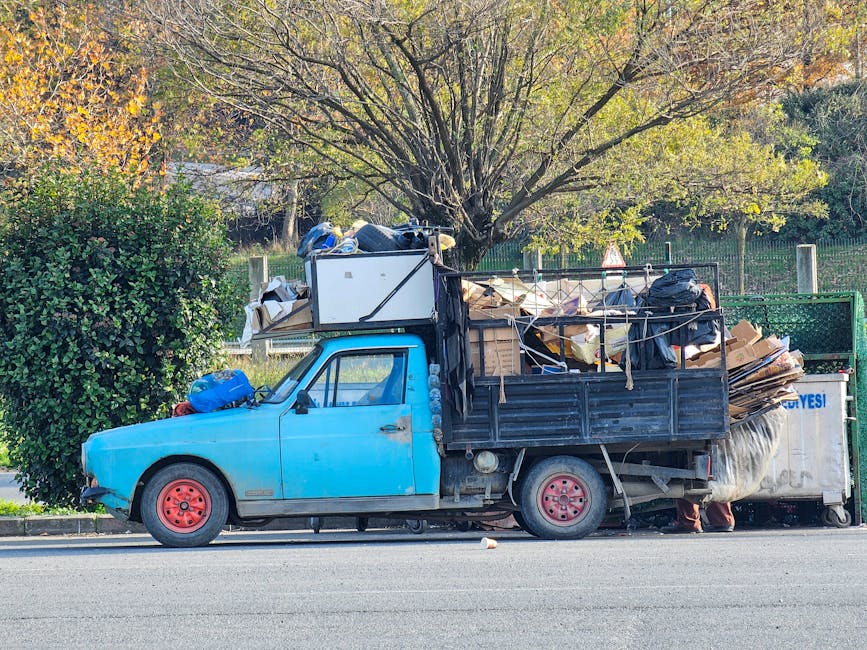
Mitcham Common bulky rubbish pickup times and prices: a practical local guide
If you are trying to figure out Mitcham Common bulky rubbish pickup times and prices, you are probably dealing with the same headache lots of people have: a sofa that will not fit down the stairs, a mattress that has seen better days, or a pile of household clutter that has quietly taken over the garage. Truth be told, bulky rubbish is one of those jobs that feels simple until you actually start planning it.
This guide explains how bulky waste pickup usually works in the Mitcham Common area, what affects collection times, how prices are typically calculated, and when an alternative like professional rubbish removal or a man and van collection may be the smarter move. You will also find a comparison table, a step-by-step checklist, and the main mistakes to avoid so you can make a clean decision without the usual stress.
Why Mitcham Common bulky rubbish pickup times and prices Matters
Bulky rubbish pickup is not just about getting rid of unwanted items. It affects how quickly you reclaim space, how much you spend, and whether the job is handled in one trip or turns into a weekend-long slog. Around Mitcham Common, people often need a fast solution because homes can be busy, parking can be awkward, and large items are never as light as they look. One old wardrobe, fair enough. Three wardrobes and a broken table? That is a different story.
Timing matters because bulky waste collections often need to fit around work hours, school runs, delivery windows, or access restrictions. Price matters because what looks like a cheap option at first can become expensive once you add waiting time, labour, congestion, or special disposal fees. If you choose the wrong service for the job, you might end up paying twice: once in money, and again in effort.
There is also a practical side to all this. Bulky items left in hallways, gardens, or shared entrances can become a safety nuisance. They get in the way, collect dust, and make a room feel far messier than it really is. A proper pickup can solve that in a single afternoon. That sense of relief is hard to beat, to be honest.
Expert summary: The best bulky rubbish solution is usually the one that matches your access, your timescale, and the true volume of waste. Cheap only matters if it is also workable.
How Mitcham Common bulky rubbish pickup times and prices Works
In practical terms, bulky rubbish pickup means arranging for large household or commercial items to be removed from your property and taken to a licensed waste facility for sorting, reuse, or recycling where possible. The exact process varies by provider, but the basic pattern is very similar.
Typical collection timeline
Most collections follow one of three timing models:
- Scheduled collection: You book a time window in advance, often for the next available slot.
- Same-day collection: Available for urgent jobs, especially if you need a quick clear-out before a move or delivery. A page like same-day skip hire can be useful if your timing is tight.
- Pre-booked load-and-go: The team arrives, loads the waste, and leaves once the job is done. This is common when space is limited or you cannot keep a container outside for long. In those cases, wait and load skip hire can be a neat fit.
Time windows are often given rather than exact arrival minutes. That is normal. Traffic, access, and previous jobs can all shift the day around. If you have ever waited for a delivery and watched the clock jump from 11:00 to "sometime this afternoon", you already know the feeling.
How prices are usually worked out
Bulky waste pricing is commonly based on a mix of volume, item type, labour, disposal route, and access. In plain English, the bigger, heavier, or trickier the load, the more likely the price is to rise. A provider may quote by:
- single item, such as a mattress or sofa
- load size, based on how much space the waste takes in the vehicle
- manpower and labour time, especially if items need carrying down stairs
- special handling, for fridges, appliances, confidential material, or awkward furniture
- permit or access costs, if a vehicle cannot park directly outside
If you want a fuller picture of how waste pricing is often structured, the site's skip sizes and prices and pricing and quotes pages are helpful starting points. They are not the same as bulky waste pickup, of course, but they do show how waste jobs are usually costed in real life: by size, access, and service type.
What usually happens on the day
On collection day, the crew normally confirms access, checks the items, and either loads them directly or instructs you where to place them. If the rubbish is mixed, they may separate reusable, recyclable, and non-recyclable material. Good operators keep the process simple for you. You point. They lift. The van disappears. Job done.
For heavier or more awkward clearances, it can be worth considering grab hire services or grab lorry hire if the waste is bulky enough to need mechanical loading rather than hand loading. That is especially useful for bigger home clear-outs or mixed waste from renovation work.
Key Benefits and Practical Advantages
Bulky rubbish pickup has a few clear advantages over trying to shift everything yourself. The obvious one is convenience, but the more interesting benefit is how it reduces friction across the whole job.
- Saves time: No need to hire a van, recruit friends, or make several trips.
- Reduces physical strain: Large furniture and appliances are awkward, not just heavy.
- Helps with access problems: Professional teams are used to narrow paths, staircases, basements, and shared driveways.
- Supports proper disposal: Items can be sorted and diverted through appropriate waste routes.
- Makes planning easier: A booked window gives you a target rather than a guess.
There is also a subtle benefit people often overlook: a booked pickup creates momentum. Once the first big item goes, the rest suddenly feels manageable. You start with the sofa, then the broken chest of drawers, and before you know it the room looks usable again. Small win, big mood change.
For homes and landlords dealing with larger clearances, services like house clearance, garage and loft clearance, and office clearance can provide a more joined-up solution than ad hoc item-by-item removal.
Who This Is For and When It Makes Sense
This kind of service is a good fit for people who have more waste than can realistically go in a car boot, but not necessarily enough to justify a full building clearance. It is especially useful if the items are too large, too awkward, or too numerous to handle in one go.
Common situations where bulky pickup makes sense
- Replacing old furniture after a move or refurbishment
- Clearing a spare room, loft, or garage
- Getting rid of a damaged sofa, mattress, or wardrobe
- Removing appliances like fridges and washing machines
- Dealing with mixed household clutter after a long build-up
- Preparing a rental property for new tenants
If you are clearing a garden after a tidy-up, a dedicated garden waste removal service may be more suitable. For heavier building materials, you are usually better looking at builders waste removal or construction waste disposal. That distinction matters. A sofa and a pile of rubble are not the same job, and the pricing model reflects that.
In our experience, people often reach for the first service name they recognise. That is understandable. But choosing the right waste category nearly always saves money and avoids confusion on the day.
Step-by-Step Guidance
If you want a smooth pickup with no drama, a bit of planning goes a long way. Here is the practical route we would suggest.
- List the items clearly. Write down what you need removed, including approximate size and quantity.
- Check for special items. Appliances, mattresses, sofas, shredded paper, or anything potentially hazardous may need separate handling.
- Measure access points. Door widths, stair turns, gate openings, and parking space all matter more than people expect.
- Decide how urgent the job is. If you need it gone fast, look at same-day or wait-and-load options.
- Ask how pricing is calculated. Make sure the quote covers labour, lifting, and disposal, not just vehicle time.
- Confirm collection timing. Ask for a realistic time window and check whether arrival changes are likely.
- Prepare the items for pickup. Place them somewhere accessible if asked, and keep routes clear.
- Check recycling and disposal handling. It is always worth asking how the waste will be processed.
If you need a straightforward booking route, book online can be a sensible next step for arranging a collection. And if you are still comparing methods, rubbish removal is often the broadest option for mixed bulky items.
Expert Tips for Better Results
A few small decisions can make a bulky pickup much cheaper and smoother. They are the sort of details that do not look exciting on paper, but they matter in the real world.
Pack by category where possible
Keep wood, metal, and general household items separate if you can. Mixed loads are sometimes still fine, but cleaner loads tend to be easier to manage and may improve recycling outcomes. It also helps the crew judge the job more accurately.
Be honest about the volume
Under-quoting a load is one of the fastest ways to create a mismatch. If you say "just a couple of bits" and the driveway tells a different story, the collection can become awkward very quickly. Better to over-explain than understate.
Think about labour, not just item count
Two heavy filing cabinets can take longer than six lightweight chairs. A mattress may look harmless until you turn it sideways in a narrow stairwell. When a job involves carrying through tight spaces, labour becomes a bigger factor than volume alone.
Plan around parking and access
In local streets, parking can be the deal-breaker. If a vehicle cannot get close, loading takes longer and the price may rise. A clear parking plan can save you a surprising amount of hassle.
Use the right service for the waste type
For domestic clean-outs, domestic skip hire may be practical if you have ongoing waste over several days. For a same-day clear-out in a tight space, wait and load skip hire may be more convenient. For locked or sensitive loads, enclosed and lockable skip hire can offer extra peace of mind.
And one more thing: if something sounds too cheap to be true, have a second look. Waste jobs can look simple from the outside, but the real cost is usually buried in the details.
Common Mistakes to Avoid
Most bulky rubbish problems come from avoidable mistakes rather than bad luck. The list below is boring in the best possible way: it saves money.
- Forgetting to check item restrictions. Some items cannot go with general bulky waste and need specialist disposal.
- Guessing the load size. A rough estimate is fine, but a wild guess usually causes pricing surprises.
- Leaving access until the last minute. If the crew cannot park close, the job becomes slower and more expensive.
- Mixing hazardous items into a standard load. This can cause refusal, delays, or extra charges.
- Not asking about timing windows. If you need a very precise arrival, confirm that early.
- Ignoring permit needs. If a vehicle or skip needs to be positioned in a restricted spot, check whether a permit is needed.
For regulated or difficult waste, the safer route is usually to ask first. Hazardous waste disposal should always be handled carefully, and in some cases furniture items such as a mattress or sofa are better dealt with through a dedicated route like mattress and sofa disposal.
Tools, Resources and Recommendations
You do not need much to organise a bulky rubbish pickup, but a few simple tools make the process easier. A phone camera, a rough tape measure, and a note app are honestly enough for most jobs.
- Camera photos: Send clear pictures of the items and access route.
- Basic measurements: Note widths of doors, stair bends, and garden gates.
- Load checklist: Group items by room or waste type.
- Payment readiness: Keep your payment details and invoice expectations clear.
- Booking confirmation: Save the agreed time window and service details.
If you want to understand how a waste company handles standards and service quality, a few site pages are worth reading before you book. The company's about us page helps you judge who you are dealing with, while recycling and sustainability can tell you how it approaches disposal and recovery. For security and payment confidence, payment and security is worth a look too.
If you are booking for a business site rather than a home, the most relevant options may be commercial skip hire or site clearance. That is where the job becomes less about one sofa and more about keeping operations moving. Very different beast, really.
Law, Compliance, Standards, or Best Practice
Waste removal in the UK should be carried out with proper care for lawful disposal, duty of care, and environmental handling. You do not need to become a waste expert to book a pickup, but it does help to understand a few basics.
First, a reputable operator should be able to explain where waste goes and how it is managed. Second, mixed loads should not be used as a dumping ground for items that need special treatment. Third, if access to the collection point involves the public highway, permit-related issues may arise. In those situations, skip hire permits and skip permits pages are useful for understanding the general principle, even when the job is bulky rubbish rather than a static skip.
Best practice also means being clear about what is being removed. A clear description protects you as much as the collector. It avoids misunderstandings, supports safer loading, and helps the company price the job properly. That is the kind of boring clarity that saves everybody time.
If items are sensitive or private, confidentiality matters too. In those cases, confidential shredding is the right type of service, not general bulky waste removal. Same principle for white goods: if it is a fridge or appliance, check the right route first, and consider fridge and appliance removal.
Options, Methods, or Comparison Table
There is no single best answer for every bulky waste job. Here is a practical comparison of the main approaches people use around Mitcham Common.
| Option | Best for | Typical timing | Pricing style | Main advantage |
|---|---|---|---|---|
| Bulky rubbish pickup | Single or mixed large household items | Booked time window | Usually based on volume, labour, and item type | Quick and convenient |
| Rubbish removal | Mixed household waste and awkward items | Often flexible or same-day | Quoted per load or job | Hands-off service |
| Man and van | Smaller clear-outs, a few heavy items | Often flexible | Usually hourly or by load | Good for access-heavy jobs |
| Skip hire | Ongoing waste over several days | Delivered and collected later | Fixed size and hire period | Ideal for phased jobs |
| Wait and load | Limited parking, fast loading, no long stays | Short collection window | Based on load and service time | Useful where leaving a skip is awkward |
If your main concern is timing, a one-off pickup or wait-and-load service often wins. If the problem is ongoing waste from a refurbishment, a skip is usually more practical. If the waste is heavy and access is difficult, man and van can be the quiet hero of the day.
Case Study or Real-World Example
A fairly typical local scenario goes like this. A family clears out a front bedroom before a new baby arrives. There is an old mattress, a broken cot, two wardrobes, and a heavy chest of drawers that has somehow become twice as stubborn as when it was bought. The hallway is narrow, parking is tight, and everyone wants the room free before the weekend.
They first consider hiring a van and doing it themselves. Sensible idea, on paper. Then they remember the stairs, the awkward corners, and the fact that the mattress has to be wrestled through a shared entrance on a Tuesday evening. Not ideal.
Instead, they choose a booked bulky rubbish pickup with a clear time window. They send photos, confirm access, and separate anything reusable from general waste. The crew arrives, loads the items quickly, and the room is empty by lunchtime. Not magic. Just good planning.
What made the difference? Three things: accurate description, realistic timing, and choosing the right type of service. That is the pattern again and again. The right service is rarely the fanciest one. It is the one that fits the job without fuss.
Practical Checklist
Use this before you book. It will save you from most avoidable mistakes.
- List every bulky item you want removed.
- Note whether any item is damaged, heavy, or awkward to carry.
- Check if anything needs specialist disposal.
- Measure access points and parking space.
- Decide whether you need same-day collection or can wait.
- Ask how the price is calculated.
- Confirm what is included in the quote.
- Ask about recycling and disposal handling.
- Clear a route to the items if requested.
- Keep your booking confirmation handy on the day.
If your job is mixed with other household clearing, you may also find garage and loft clearance and house clearance useful references for planning the wider job. And if you are comparing different waste handling routes, waste recycling services is worth reading for a better sense of how materials are typically treated after collection.
Conclusion
Getting a handle on Mitcham Common bulky rubbish pickup times and prices mostly comes down to three things: how much waste you have, how easy it is to access, and how quickly you need it gone. Once those are clear, the right choice usually becomes obvious. If not, a good waste provider should be able to help you narrow it down without making the process feel like a puzzle.
For some jobs, a straightforward pickup is the best answer. For others, a skip, wait-and-load, or man-and-van option will fit better. The win is not just getting rid of stuff. It is getting your space back without unnecessary fuss, and that little bit of calm afterwards is worth a lot.
Get a free quote today and see how much you can save.
Frequently Asked Questions
What are typical Mitcham Common bulky rubbish pickup times?
Most bulky rubbish pickups are arranged within a booked time window rather than an exact minute. Same-day slots may be possible for urgent clear-outs, while other jobs are booked for the next suitable day. If you need a very tight arrival time, ask before confirming.
How are bulky rubbish pickup prices usually calculated?
Prices are commonly based on item size, total load volume, labour required, access difficulty, and whether any items need special handling. A sofa on the ground floor is one thing; the same sofa on the third floor with no lift is another.
Is bulky waste pickup cheaper than hiring a skip?
Not always. If you only have a few large items, a pickup can be more cost-effective. If you are clearing waste over several days, skip hire may work out better. The cheaper option depends on the volume, access, and how quickly you need the waste removed.
Can I get same-day bulky rubbish removal in Mitcham Common?
Sometimes, yes. Availability depends on the day, the size of the job, and how far the team is already booked. If speed matters, look for services that support urgent collection and be ready with clear photos and item details.
What items usually count as bulky rubbish?
Large household items such as sofas, beds, wardrobes, tables, and some appliances are usually treated as bulky waste. Exact acceptance depends on the service and the item condition, so it is always best to confirm before booking.
Do I need to move the items outside before collection?
Not always. Some services collect from inside the property, while others prefer items to be placed at the boundary or in an accessible loading area. The more awkward the access, the more important this question becomes.
What if I have a mix of furniture, appliances, and general rubbish?
A mixed load is common. The key is to describe everything accurately so the provider can quote properly and advise whether any items need separate treatment. Fridges, for example, are often better handled through a dedicated appliance removal service.
Do bulky rubbish collections require a permit?
Usually the collection itself does not, but access and parking can create permit-related issues if a vehicle needs to use restricted road space. If you are using a skip or leaving anything on the highway, permit questions become more relevant.
How can I keep bulky rubbish pickup costs down?
Be accurate about what you need removed, group items sensibly, improve access where possible, and avoid leaving the booking until the last minute. Clear photos and measurements also help prevent pricing surprises.
What should I check before I book a pickup?
Check the time window, price basis, item restrictions, access requirements, and whether disposal is included. It is also wise to ask how the waste will be sorted and whether the provider has clear terms and conditions.
Is bulky rubbish removal suitable for landlord or end-of-tenancy clear-outs?
Yes, often very much so. It works well for left-behind furniture, broken appliances, and mixed clutter after tenants move out. For larger jobs, though, a broader service such as house clearance or site clearance may be a better fit.
What happens to the waste after collection?
Typically it is taken to a licensed facility where it can be sorted for reuse, recycling, or disposal. Good operators should be able to explain this in plain English. If they cannot, that is worth noticing.